5 Iconic Reef Species at Bunaken: A World-Class Wide-Angle Diving Destination
|January 12, 2026
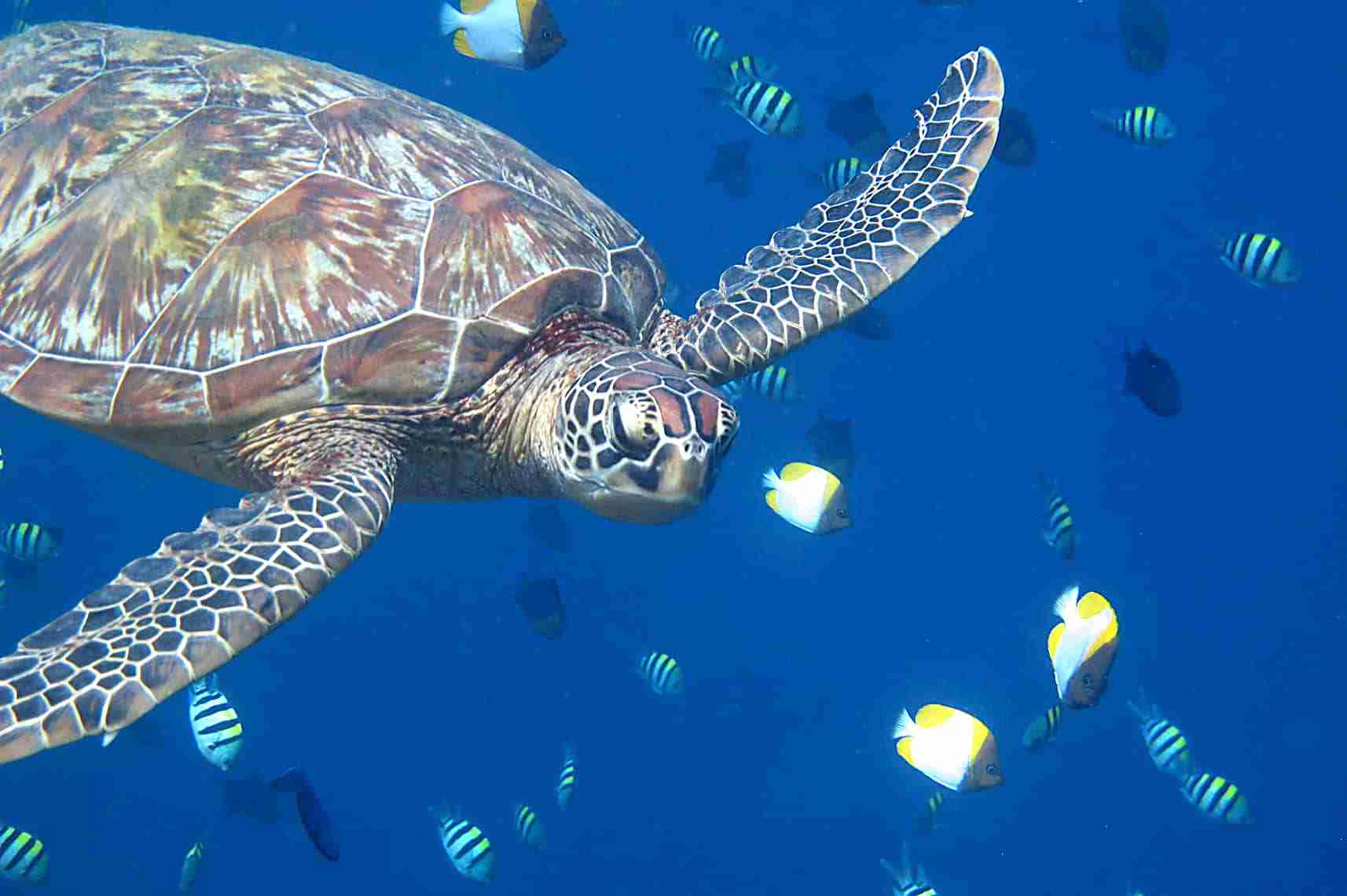
If you love big reefs, clear water, and the kind of marine life that makes you forget about your air consumption for a moment, Bunaken is hard to beat.
Located just offshore from Manado in North Sulawesi, Bunaken National Marine Park sits right in the heart of the Coral Triangle. What that means underwater is simple: dramatic walls, excellent visibility, and a real sense of scale. This is the kind of place where wide-angle diving truly shines — not because of one single “wow” moment, but because almost every dive delivers something special.
Here are five iconic reef species you’re very likely to encounter in Bunaken, and why they help make this area such a favourite among wide-angle divers and photographers.
1. Green Sea Turtles – Everywhere, All the Time
Bunaken is famous for its green sea turtles, and for good reason. It’s not unusual to see several turtles on a single dive, often at depths between 5 and 30 metres. Some are cruising along the wall, others are resting on ledges, seemingly unfazed by passing divers.

Years of protection and local conservation have paid off, and it shows. The turtles here feel relaxed, which makes encounters feel natural rather than rushed — perfect for wide-angle shots with the reef wall fading into the blue behind them.
If you’re hoping for that classic turtle-over-the-reef photo, Bunaken is one of the most reliable places to get it.
2. Hawksbill Turtles – Smaller, Busier, Just as Beautiful
Alongside the green turtles, you’ll also spot hawksbill turtles, usually between 10 and 25 metres. They’re smaller, more energetic, and often busy feeding among the corals.
Hawksbills are great wide-angle subjects because they tend to stay close to the reef, giving you a chance to frame both the turtle and the coral structure in one shot. Their presence is also a good sign — hawksbills rely on healthy, complex reefs, and Bunaken has plenty of those.
3. Napoleon Wrasse – Gentle Giants of the Reef
Few reef fish make as strong an impression as the Napoleon wrasse. These massive, slow-moving fish can grow to over 2 metres in length, and when one glides past you along a vertical wall, it really drives home just how big Bunaken’s reefs are.

They’re often curious, sometimes approaching divers before continuing on their patrol of the reef edge. Seeing one up close is always a highlight, and for wide-angle photographers, they’re a dream subject — large, colourful, and perfectly at home in dramatic reef scenery.
Considering they’re endangered globally, regular sightings here are something to appreciate.
4. Reef Sharks – Just Enough Adrenaline
Bunaken isn’t about big shark action, but blacktip and whitetip reef sharks are regularly seen, especially along deeper wall sections and current-exposed areas between 15 and 35 metres.

They usually cruise by calmly, silhouetted against the blue, adding just the right amount of excitement to a dive. For wide-angle photography, they’re ideal: clean shapes, natural movement, and plenty of space around them to show the environment.
And no — they’re not interested in you. They’re just doing shark things.
5. Eagle Rays and Passing Pelagics
One of the great things about Bunaken’s steep walls is how close deep water comes to the reef. This makes it a natural highway for pelagic visitors.
Eagle rays, often with wingspans of over 2 metres, are among the most elegant sights you’ll encounter, gliding past in small groups. Add in schools of giant trevally, dogtooth tuna, jacks, and barracuda, and you’ve got dives that feel open, dynamic, and full of life.

These moments are what wide-angle diving is all about — big animals, big space, and a strong sense of motion.
So, Why Is Bunaken So Good for Wide-Angle Diving?
The Walls Are the Star
Bunaken’s reefs drop almost straight down, often starting just below the surface and continuing far beyond recreational depths. This creates natural backdrops that make turtles, sharks, and rays look even more impressive — and makes divers feel very small in the best possible way.
Visibility That Lets You Breathe (and Shoot)
Visibility often reaches 30 metres or more, which is a big reason why wide-angle works so well here. Clear water means cleaner photos, better colours, and the ability to include both foreground and background without everything turning blue and hazy.
Life at Every Level
From coral-covered walls to schools of fish in open water, Bunaken is visually rich. Even when the “big stuff” doesn’t show up right away, the reef itself is always worth looking at — and often ends up stealing the show.
A Protected Reef That Still Feels Wild
Bunaken has been a marine park since 1991, and it shows. Fish are plentiful, large animals are relaxed, and the reefs are alive.
Final Thoughts
Bunaken isn’t about ticking off a single bucket-list species. It’s about consistently beautiful dives, where turtles, big fish, and dramatic reef walls come together dive after dive.
For wide-angle photographers, it’s one of those rare places where conditions, scenery, and marine life all make for fantastic shots.
If big reefs and relaxed marine encounters are your thing, Bunaken will feel like home underwater!
The post 5 Iconic Reef Species at Bunaken: A World-Class Wide-Angle Diving Destination appeared first on Thalassa Dive Resorts Indonesia.
