Lembeh vs Bunaken: A Complete Guide for Divers Choosing Their Next Destination
|March 15, 2026
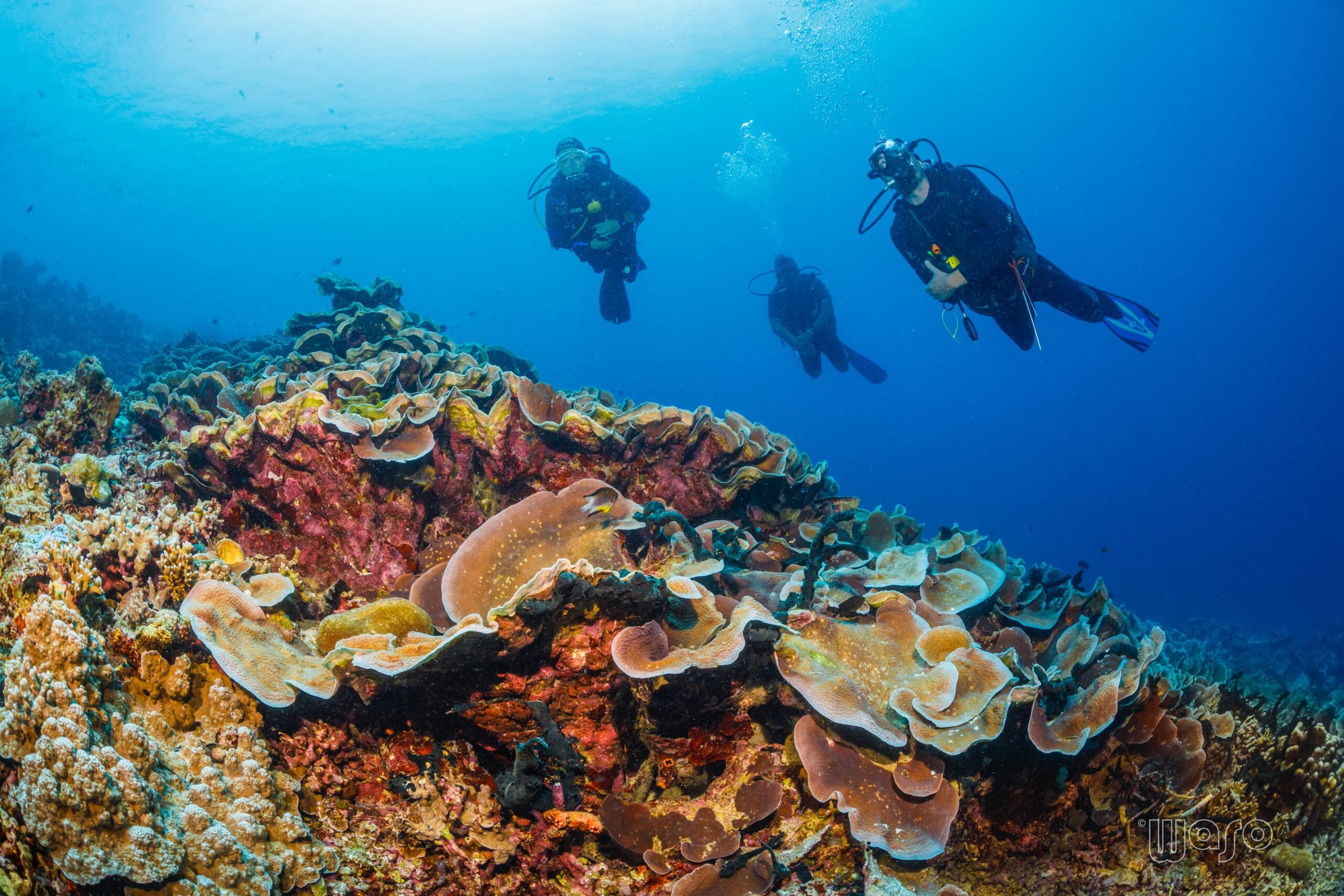
If you’re researching a dive trip to Indonesia, you’ll quickly notice that North Sulawesi keeps coming up — and for good reason. Few places in the world offer such dramatically different diving styles within the same region, so allow me to introduce the Bunaken National Park and the Lembeh Strait!
They are relatively close in distance with 50 kilometers between the two areas, but underwater they could not feel more different. Understanding those differences is the key to choosing the right destination — or, even better, realizing why so many divers fall in love with both.
In this article I’ll explain what diving is like in Bunaken and Lembeh, who each area suits best, and why combining them creates such a memorable dive experience.
Bunaken National Park: Classic Reef Diving Done Exceptionally Well

For many divers, Bunaken represents the image they have in mind when they think of tropical scubadiving and snorkeling.
The underwater world and the marine life
Bunaken is famous for its steep coral walls that start shallow and drop almost vertically into deep blue water. These walls are covered in colorful corals that attract large schools of reef fish.
Common sightings include:
- Green and hawksbill turtles (almost on every dive)
- Large schools of reef fish such as redtoothed triggerfish (the friendly kind!)
- Napoleon wrasse, bumphead parrotfish, and trevallies
- On occasion: reef sharks and eagle rays
Photographers take note: this is wide-angle diving at its best. It’s colorful, open, and visually impressive.
Diving style and conditions
The diving style in Bunaken is generally relaxed. Many dives involve gentle drifting along walls or slopes, allowing you to enjoy the scenery without much effort. Visibility is often excellent, and the reefs start shallow, making dives feel spacious and comfortable.
Because of these conditions, Bunaken Marine Park is very suitable for new divers, Open Water students, and refresher courses. Yes, buoyancy control is important, but the environment is forgiving. This way, you can focus on enjoying the dive rather than constantly managing technique.
Why divers love Bunaken
Bunaken delivers immediate gratification. The reefs are healthy, the marine life is abundant, and the diving feels intuitive. It’s the kind of place where divers feel relaxed and confident — especially those new to Indonesia or returning to diving after a long break.
Lembeh Strait: Slow Diving and a World Hidden in the Sand

Lembeh Strait offers a completely different experience — one that surprises many divers the first time they visit.
Not about reefs, but about discovery
Unlike Bunaken, Lembeh dive sites are mostly sandy slopes, rubble, and volcanic sediment. At first glance, they can look empty. But this is one of the most biologically rich environments in the world for macro and rare marine life.
Here you’ll find:
- Frogfishes in all sizes and colors
- Mimic, blue-ringed, and wonderpus octopuses
- Ghost pipefish and pygmy seahorses
- Rare shrimp, crabs, and nudibranchs
- Cuttlefish using incredible camouflage
Many of these animals are masters of disguise. Seeing them requires a trained eye — and patience.
Diving technique and experience level
Diving in Lembeh is slow, deliberate, and technical compared to Bunaken.
Good buoyancy is essential. Divers typically:
- Hover low over the bottom
- Keep their knees bent
- Use gentle, controlled fin kicks
This technique prevents stirring up the silty seabed, which would reduce visibility and disturb marine life. Because of this, Lembeh is generally better suited for divers with some experience, or those comfortable controlling their position in the water.
That said, Lembeh is not about depth or strong currents — it’s about precision and awareness. With good guides and a willingness to slow down, many divers adapt quickly.
Why Lembeh becomes unforgettable
Lembeh changes the way people dive. Instead of covering distance, you learn to observe. Instead of scanning the blue, you focus on tiny movements in the sand. For many divers, Lembeh becomes the most talked-about part of their trip — the place that shows them a side of the ocean they never knew existed.
Lembeh vs Bunaken: A Clear Comparison
| Aspect | Bunaken National Park | Lembeh Strait |
|---|---|---|
| Main focus | Coral walls & reef fish | Macro & rare critters |
| Diving pace | Relaxed cruising & drifting | Very slow and patient |
| Experience level | Excellent for beginners & students | Around 20+ dives logged |
| Buoyancy demands | Important but forgiving | Essential and precise |
| Visibility | Between 15–30 meters | Often 10–20 meters |
| Underwater terrain | Walls, slopes, coral gardens | Mainly sand, rubble, volcanic sediment, coral gardens |
| Photography | Wide-angle | Macro |
Which One Is Right for Your Trip?
If you are:
- New to diving
- Doing a refresher
- Visiting Indonesia for the first time
Bunaken is often the easiest and most comfortable starting point.
If you are:
- Comfortable with buoyancy
- Curious about unusual marine life
- Interested in macro photography
Lembeh offers an experience you will not find anywhere else.
Why Most Divers End Up Wanting Both

What makes North Sulawesi special is that you don’t have to choose.
Bunaken gives you scale, colour, and classic reef beauty. Lembeh pulls you into the details and teaches you to slow down. One builds confidence; the other sharpens awareness.
Many divers describe it this way:
- Bunaken reminds them why they fell in love with diving.
- Lembeh shows them how much more there is to see.
Together, they create a balanced, deeply satisfying dive vacation — and that’s why so many guests leave already planning their return trip!
The post Lembeh vs Bunaken: A Complete Guide for Divers Choosing Their Next Destination appeared first on Thalassa Dive Resorts Indonesia.
