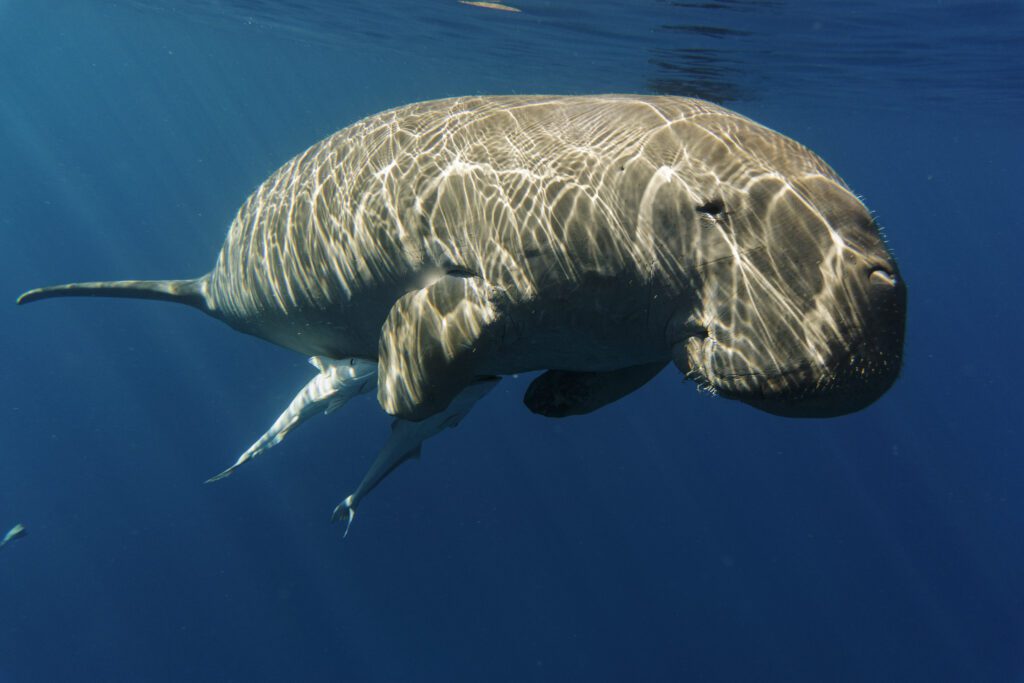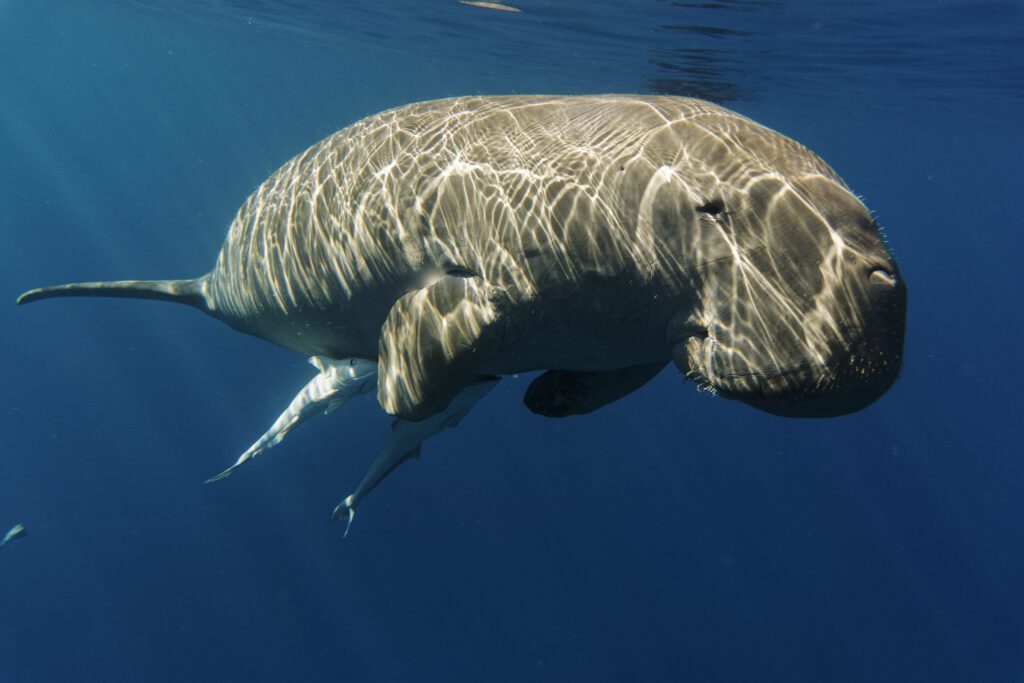
Indonesia is home to some of the most important dugong habitats in Southeast Asia. In North Sulawesi, although sightings are never guaranteed, patient divers and snorkelers can occasionally encounter these remarkable animals grazing in seagrass-rich coastal environments. For those lucky enough to enjoy a glimpse of these gentle giants, encounters can be a once-in-a-lifetime diving experience.
But what exactly are dugongs? What makes them unique? And how can divers make sure interactions with them are responsible and safe? Developing a better understanding of their biology, behavior, and conservation background can not only enrich the experience, but also help support protection for one of the ocean’s most vulnerable mammals.
In this article, we take a closer look at dugongs and provide everything divers need to know about the sea cows of Sulawesi.
What is a Dugong?
The dugong (Dugong dugon) is a marine mammal belonging to the order Sirenia, a group often referred to as ‘sea cows’. Dugongs are the only surviving member of the family Dugongidae and are closely related to manatees, although they differ in both appearance and habitat preferences.
Unlike seals or dolphins, dugongs are fully herbivorous. Adults can reach lengths of 3 meters and weigh up to 500 kg, making them among the largest marine mammals encountered in tropical coastal waters. Their paddle-like forelimbs, streamlined bodies and distinctive fluked tails allow them to move gracefully through shallow marine environments.
Dugongs have evolved over millions of years to specialize in feeding on seagrasses, making them one of the most important herbivores in tropical marine ecosystems.
What Do Dugongs Eat?
Dugongs feed almost exclusively on seagrass. Using their muscular, downturned snouts, they uproot entire plants from the seabed before separating the nutritious leaves and roots from sediment.
Not all seagrasses are equally appealing. Dugongs generally favor fast-growing, nutrient-rich species that are easier to digest. As they feed, they create distinctive furrows or feeding trails across the seabed, which can sometimes be seen by divers exploring healthy seagrass meadows in coastal areas around North Sulawesi.
An adult dugong may consume more than 30 kg of seagrass every day. This grazing behaviour helps maintain healthy seagrass ecosystems by encouraging new growth and preventing dominant species from outcompeting others.
Why Are Dugongs Important to Marine Ecosystems?
Dugongs are often described as ecosystem engineers. By selectively grazing on seagrass beds, they help maintain biodiversity and improve the overall health of these highly productive habitats.
Seagrass meadows provide critical nursery grounds for fish, feeding areas for turtles, and shelter for countless invertebrates. They also play an important role in carbon sequestration, storing significant amounts of ‘blue carbon’ within their sediments.
When dugong populations decline, the structure and composition of seagrass ecosystems can change dramatically. Protecting dugongs therefore helps safeguard entire coastal food webs and contributes to broader marine conservation goals.
To learn how Murex is helping to protect and restore marine habitats in North Sulawesi, click here.